Why the Manila Drawer Still Wins
Plastic bins solved one problem and created three others. A case for the unglamorous manila folder, and where it still beats anything newer.
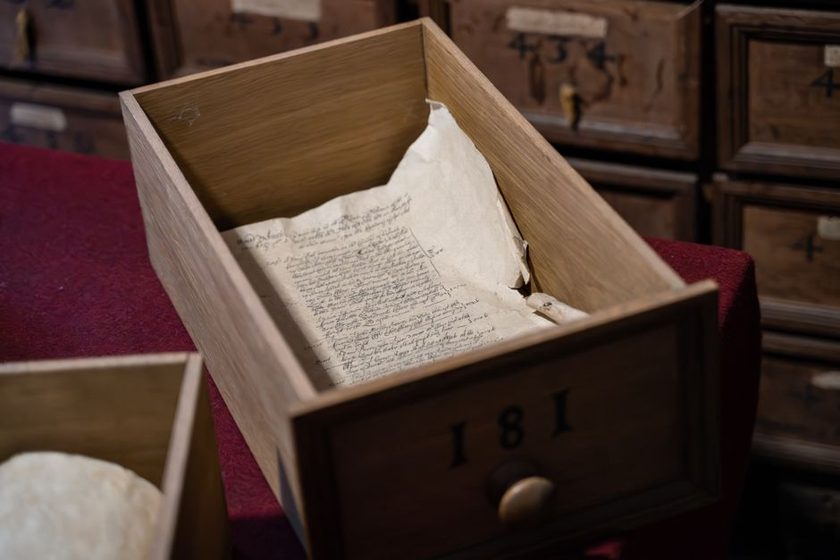
Open a drawer that has held paper for a decade and you can read the whole argument in one glance. The manila folders have gone soft at the corners and the color of weak tea, and a hand still slides a sheet out of any one of them without catching on a fold or a seam. Two drawers over, the clear plastic bin bought the same year looks almost unchanged — glossy, squared, exactly as new — except for a sheet stuck flat to its own static cling and a faint closed-room smell that was not there when the lid first went on. The plastic did not fail by breaking. It failed by sealing.
The problem plastic bins actually solve
Bins earn their keep against a specific and visible set of threats: a burst pipe, a curious mouse, a shelf near a garage door that lets in weather. Against all three, a lid and a rigid wall genuinely help, and nobody should pretend otherwise. Where the bin runs into trouble is the threat it was never built to answer — the ordinary, slow chemistry of paper sitting in the same air for years. A bin designed to keep water out will, with equal thoroughness, keep the paper's own moisture in. That is not a manufacturing flaw. It is what "sealed" means.
Once the air inside a container stops exchanging with the room, whatever humidity the paper releases has nowhere to go. It condenses on the inside wall on a cool night and gets reabsorbed by the top sheet the next morning, over and over, in a small closed cycle nobody is watching. A folder in an open drawer loses that moisture to the room instead. It is a small difference in physics that turns into a large difference after five years.
What breathability means for a folder
Manila is not inert; it is a fiber that moves a little with the humidity around it, and that movement is the whole point. A folder that has taken on damp will show it — a soft curl at the top edge, a slight give when you pick it up, sometimes a color shift toward gray at the corner touching the drawer bottom. None of that is pleasant to notice, but it is information, delivered early, while the fix is still as simple as moving the folder to a drier shelf.
A sealed bin gives you no such warning. The first sign of trouble is often the smell on the day you finally open it, by which point the damage has usually been setting in for a while. For more on what that smell actually is and where the discoloration comes from, see Where the Dust Actually Comes From — the short version is that it is rarely just dust.
A folder that breathes will tell you it's dying decades before a bin that seals will tell you anything at all.
Manila versus hanging files: a handling argument
Hanging files earn their place in an active drawer — the metal frame lets a folder ride at a fixed height, which is genuinely faster when you are pulling the same dozen folders every week. The cost shows up on the folder itself: a tab that gets gripped at the same corner hundreds of times, a fold that takes the frame's rail pressure instead of just its own weight. For paper you are filing once and rarely touching again, that wear buys you nothing.
A stack of loose manila folders in a drawer, by contrast, spreads handling wear across the whole surface rather than one tab, and a folder near the back of a rarely opened drawer barely wears at all. The trade-off is retrieval speed, not durability — hanging files win on frequent access, manila wins on quiet, long-term storage, and most archives are mostly the second kind.
| Material | Airflow around contents | Handling wear | Common failure mode |
|---|---|---|---|
| Manila folder | Open, exchanges with room air | Spreads across the whole sheet | Softening, curl at the edge over many years |
| Poly storage bin | Sealed once the lid is on | Low — contents rarely touched | Trapped condensation, static cling, closed-air odor |
| Hanging file (kraft, metal rail) | Open, similar to loose manila | Concentrated at the tab and rail fold | Tab tears, fold weakens at the rail line |
| Expanding (accordion) file | Partial — depends on closure | Moderate, wears at the gusset seams | Gusset splits when overfilled |
Where humidity goes when it has nowhere to go
The bins that seem to fail worst are rarely the ones opened often — those get an occasional air exchange whether anyone intends it or not. It is the bin that gets closed once, pushed to the back of a closet, and left for a decade that tends to concentrate the problem, because the same small cycle of condensation and reabsorption has run uninterrupted the whole time. That is a close cousin of the box discussed in The Box That Never Closes — a container problem that has less to do with the lid and more to do with how long it stayed shut.
None of this means plastic has no place in an archive. It means the job it does well — keeping liquid water and pests out — is a different job from the one paper actually needs, which is somewhere to shed its own moisture rather than trade it back and forth with itself.
A quick way to check a drawer
- Lift a folder from the middle of the stack, not just the top — the middle holds humidity longest.
- Look at the bottom edge, where it touches the drawer or bin floor, for a faint gray or brown tint.
- Note any give or softness at a corner that the rest of the sheet doesn't share.
- If a sealed bin has a smell on opening, some people find it helps to leave it open to the room for a day before refiling anything.
The case against uniformity
A shelf of identical plastic bins looks tidier than a drawer of softening manila, and for a showroom that would be the end of the argument. For an archive meant to be checked once a year rather than admired, the opposite is closer to true. A folder that shows its age at a glance saves you from opening every container on the shelf just to find the one that needs attention; a row of uniform bins hides that information behind identical lids until you check each one by hand.
This is really the same logic behind what actually survives seven years in a closet — the materials that age visibly tend to be easier to manage than the ones that age invisibly and then fail all at once.
- Manila tends to win for paper meant to sit, largely untouched, for years at a stretch.
- Hanging files tend to win for a small set of folders pulled weekly or monthly.
- Poly bins tend to win for objects — photos in sleeves, small keepsakes, anything that isn't loose paper.
- Expanding files tend to win for a single project's worth of documents that will be closed out and moved within a year or two.
A note on this comparison. These are general tendencies drawn from ordinary household conditions, not a laboratory material test, and a very humid basement or a very dry attic will shift the outcome in either direction. Nothing here is a recommendation to buy or discard a particular product — it's a description of how these materials tend to behave once paper has been sitting in them for a while, offered so you can look at your own shelf with a clearer eye.