Longevity · February 3, 2026
What Actually Survives Seven Years in a Closet
Paper degrades on its own schedule, not the one printed on the folder. A look at what actually holds up in a closet, attic, or garage box over seven years.
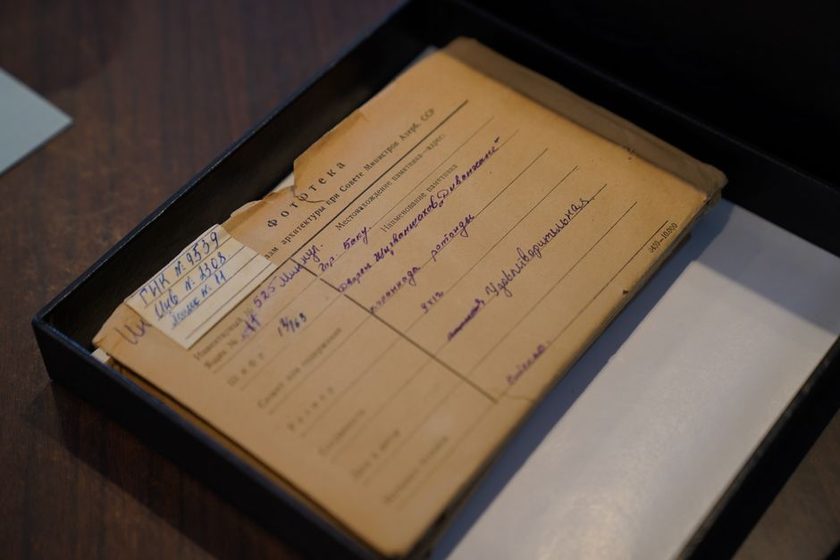
Somewhere in most houses there is a box that has not been opened since the day it was taped shut. Maybe it is a moving box nobody got around to unpacking, or a closet shelf holding the folders that some tax preparer once told you to keep for seven years. When that box finally comes down, people tend to expect one of two outcomes: everything intact, or everything ruined. What is actually inside is neither. Some sheets look like they were filed last month. Others have gone the color of weak tea and started to flake along the folds. A few have simply gone blank, the print lifted off the page as if it had never been there at all. The folder did not decide any of that. The paper did, on its own terms, and it started keeping time the day it was made, not the day it went into the box.
The Seven-Year Rule Was Never About the Paper
"Keep it seven years" is an administrative convention, not a material one. It tells you how long a record might matter to an auditor or an insurer, and it says nothing about how long the sheet itself intends to hold together. The confusion is understandable — the same box that holds the record also holds an implicit promise that the paper will cooperate for exactly as long as the rule requires, then it can fall apart on schedule. Paper doesn't read the label on its own folder. We've gone into this mismatch between filing convention and physical reality at more length in a piece on why order of arrival matters more than the topic you filed something under — the retention period is a human decision layered on top of a chemical one, and the two rarely line up.
Substrate Decides More Than People Assume
Not all paper starts from the same stock, and that difference matters more over seven years than almost anything that happens to it afterward. Cotton rag and high-quality bond paper are made with fibers that have had the lignin largely removed, so they resist the yellowing and brittleness that comes with acid buildup. Cheaper wood-pulp stock — the kind used in newsprint, notepads, and a lot of everyday office paper decades ago — still carries lignin, and lignin oxidizes. That is the process behind a newspaper clipping turning the color of a manila folder within a few years regardless of how carefully it was stored. Thermal paper, the coated stock used for many register receipts, is its own category entirely: the image sits in a heat- and light-reactive coating on the surface rather than in ink absorbed into the fiber, and that coating has a decay clock that runs independent of how well the sheet itself is holding up.
Ink Ages on a Different Clock Than the Sheet
It helps to remember that the sheet and the mark on it are two separate materials, aging in two separate ways. Laser toner is fused onto the page and tends to remain sharp and legible long after the paper underneath has yellowed or gone brittle. Ballpoint ink oxidizes over time and can shift color or fade depending on the dye formulation used, sometimes independent of how the paper around it is holding up. Inkjet ink, especially dye-based rather than pigment-based, is more sensitive to humidity and can bleed or fade faster than the sheet it sits on. And thermal print, as noted above, can vanish while the receipt paper itself is still perfectly flexible.
The sheet and the mark on it are not one material aging together — they are two materials running on two different clocks, and a storage box only ever measures one of them.
What the Storage Environment Actually Does
Environment does not create decay out of nothing, but it sets the pace at which the substrate and ink chemistry above actually play out. An attic goes through wide daily and seasonal temperature swings, and that expansion-and-contraction cycle stresses fiber and accelerates the same oxidation that would happen slowly in a stable interior closet anyway. A garage adds humidity swings on top of that, which is where foxing — the small brown spotting some people notice on old paper — tends to show up first. Direct light, even the indirect daylight that reaches a shelf near a window, breaks down both dyes and fiber faster than darkness does. And contact matters as much as climate: a rubber band left across a stack for years can leave a stain and a brittle groove, a metal paperclip can rust and bleed onto the page beneath it, and a folder made from the same acidic wood-pulp stock as old newsprint can transfer its own decay onto whatever cleaner paper it is protecting. We cover that transfer effect in more detail in a piece on where the dust and the rust marks in old boxes actually come from.
- Repeated humidity swings, more than steady humidity at either extreme
- Any direct or indirect light exposure over years, not just full sun
- Contact with acidic wood-pulp cardboard, folders, or brown paper
- Metal fasteners — paperclips, staples, binder rings — left in place long-term
- Sealing paper airtight while any residual moisture is trapped inside
Field note: Thermal register receipts are the one item people are consistently surprised by. Even kept dark, dry, and flat, the printed total can fade to an unreadable smear within two or three years — the coating simply was not built for longevity, and no amount of good storage changes that. A photocopy, or a scan taken at the time of filing, tends to outlast the original receipt by a wide margin.
Seven Years Later: A Rough Field Guide
None of these combinations are lab measurements — they are the patterns that tend to show up when a box actually gets opened after roughly seven years in ordinary household storage, not controlled archival conditions.
| Substrate | Ink or print type | Typical storage | Common condition after seven years |
|---|---|---|---|
| Cotton rag bond | Ballpoint or fountain ink | Closet, stable temperature | Legible, mild fading, sheet still supple |
| Groundwood newsprint clipping | Printed ink | Attic, wide temperature swings | Yellowed, brittle at folds, edges crumbling |
| Thermal register receipt | Thermal print | Drawer or box, any climate | Text often faded to blank by year two or three |
| Standard office paper | Laser toner | Garage, humid | Sheet wavy or lightly foxed, toner still sharp |
| Cardstock certificate | Engraved or offset ink | Closet, stored flat | Sheet and ink both holding up well |
What This Actually Means for What You Keep
Once substrate, ink, and environment are separated out as three distinct variables, the seven-year box stops being a mystery and starts being predictable. A thermal receipt is on borrowed time no matter where it lives, so the useful move is capturing the total elsewhere before the coating gives out. A newsprint clipping in an attic is racing its own chemistry; a cotton bond letter in a stable closet mostly is not. None of that is about upgrading every box to museum conditions — it is about knowing which items in a household archive are actually vulnerable to ordinary time, and which ones were never going to be the problem in the first place.
A note on scope: This is a description of what tends to happen to paper under ordinary attic, garage, and closet conditions over about seven years — not a substitute for professional conservation guidance. Documents that need to survive intact for decades, rather than years, call for preservation standards well beyond what a household shelf can offer.