Journal · June 18, 2026
The Year I Numbered Everything
A personal log of one year spent assigning a call number to every document in the house — what took an afternoon, and what took four months.
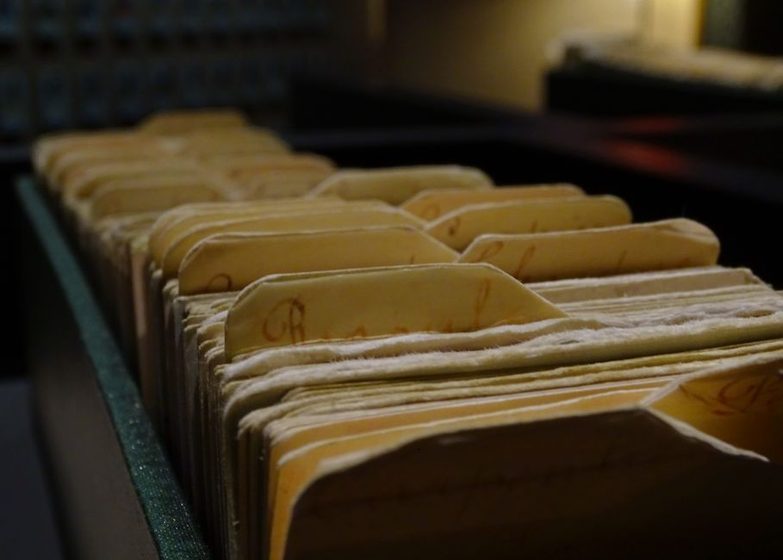
I started this on the second of January with a legal pad, a roll of small white labels, and an estimate I now find almost funny: three weekends, tops. The plan was simple enough on paper. Every document in the house — every warranty card, tax folder, school record, insurance letter, and stray receipt — would get one thing it had never had before: a permanent number, assigned in the order I found it, written in one running log. Not sorted by topic. Not re-filed into some improved category scheme. Just numbered, in sequence, the way a library assigns an accession number to whatever arrives that day regardless of subject. I finished on the fourteenth of December. What follows is the log of how that gap between three weekends and eleven months actually happened, room by room.
The Estimate I Made in January
The plan assumed every document in the house lived somewhere I already knew about and was already in some rough order. That assumption held for exactly one room. I'd pictured the whole project as an extension of how I already thought about the topic, an idea I'd been circling for a while and had written up more formally in a piece on why order of arrival beats organizing by topic — the number would simply mark when a document entered the house, not what it was about. What I hadn't accounted for was that "the house" turned out to include a garage shelf, three moving boxes from a move eleven years earlier, a filing cabinet drawer nobody had opened since a previous tenant of that drawer's contents had died, and a shoebox of my own that even I couldn't explain.
The Kitchen Drawer Took an Afternoon
The kitchen junk drawer went first, partly because it was easy and partly because I wanted an early win. Everything in it already had some rough sense of recency to it — a warranty card from a blender bought that spring, an appliance manual from three years back, a stack of takeout menus that told their own story of when we'd moved into the neighborhood. I pulled each item, dated it as best I could from a receipt or a postmark or my own memory, and wrote it into the log in the order it had actually arrived in the house, not the order it happened to be sitting in the drawer. Forty-one items, one afternoon, done by dinner. It gave me exactly the false confidence I needed to be wrong about everything that came after.
The Attic Took Four Months
The attic did not go the same way, and it is worth being specific about why, because "it just took longer" undersells what actually happened up there. Nothing in those boxes had a date on the outside. Several boxes held three different decades of paper mixed together, because whoever packed them — sometimes me, years earlier — had been packing for a move, not for a record. Some items needed a phone call to a sibling to even guess at a year. A few had gone soft and stained from a slow roof leak I hadn't known about, and those needed a decision about disposal before they needed a number at all, which is its own project I've since written about separately in a piece on keeping a running ledger of what gets thrown out and why. And twice, mid-project, a box I'd already numbered got reopened by someone else in the house looking for something specific, and came back to me reshuffled. The four months wasn't four months of steady numbering. It was maybe three weeks of actual labeling spread across four months of waiting on information, drying things out, and re-establishing order that had been disturbed.
A number tells you when something arrived. It cannot tell you when someone last needed to know that — and half of what slowed the attic down was reconstructing that second thing before I could write down the first.
Field note: The single largest time cost in the whole project wasn't numbering — it was dating. Any document with a printed date on it took seconds. Anything without one, especially the older attic material, could take ten or fifteen minutes of cross-referencing a postmark, a handwriting style, or a family member's memory before I trusted a year enough to log it.
What Actually Slowed a Room Down
By midyear I'd numbered enough rooms to notice a pattern, and it had almost nothing to do with how much paper a room held.
- Whether items already carried a visible date, versus needing detective work to establish one
- Whether the box had been packed once, cleanly, or repacked several times across different moves
- Whether anyone else in the house was still actively pulling from that pile mid-project
- Whether damage or disposal decisions had to be made before a number could be assigned at all
| Location | Approx. items numbered | Time spent | What made it fast or slow |
|---|---|---|---|
| Kitchen drawer | 41 | One afternoon | Everything recent, everything dated, nobody else touched it |
| Home office filing cabinet | ~180 | One weekend | Already loosely chronological from prior use |
| Hall closet, school records box | ~95 | Two weekends | Dated by school year, but split across two boxes to merge |
| Garage shelf | ~60 | Six weeks | Mixed decades, some water contact, disposal calls needed first |
| Attic, three old moving boxes | ~210 | Four months | No dates visible, repacked twice over the years, reopened mid-project |
Writing the Scheme So It Would Actually Hold
None of the numbering would have meant anything without a consistent way to write the numbers themselves, and I went through two failed formats before landing on one that held up across a whole house. The details of what that scheme ended up looking like, and why a plain sequential number beat every clever coded alternative I tried first, are their own piece: how I ended up writing a call number for a home archive. What matters for this log is simpler — once the format was fixed in January, I never had to change it again, even for the attic boxes that broke almost every other assumption I'd started with.
What the Log Looked Like in December
By the fourteenth, the running log held 1,142 entries, in one continuous sequence from the kitchen drawer's first warranty card to a single insurance letter that had been sitting, unopened and unremarkable, in a coat pocket in the hall closet the whole time. The number itself carries no story. What makes the log useful is that it is one list, in one order, that I can now scan in about the time it takes to read a page, rather than nine separate piles I'd have to open one at a time to know what any of them held.
A note on scope: This is a personal account of one household's numbering project over one calendar year, offered as a record of what the timeline actually looked like — not a projection of how long any other house or archive would take. The variables that stretched four rooms into four months were specific to that attic, that leak, and that family's history of packing.